


 Secure and Reliable
  High quality
  Worldwide shipping
  Bonuses and Discounts
  Money back Guarantee
 - Bestsellers
- Alcoholism
- COVID-19
- Allergy
- Anti Fungal
- Alzheimers
- Anti Viral
- Anti-Depressants
- Anti-Inflammatory
- Antibacterial
- Antiparasitic
- Antibiotics
- Arthritis
- Asthma
- Birth Control
- Blood Pressure
- Cancer
- Cardiovascular
- Cholesterol
- Diabetes
- Diuretics
- Erectile Dysfunction
- Eye Drop
- Gastro Health
- General Health
- Hair Loss
- Hepatitis C Virus (HCV)
- HIV
- Hormones
- Men's ED Packs
- Men's Health
- Mental Illness
- Motion Sickness
- Muscle Relaxant
- Pain Relief
- Parkinson’s Disease
- Veterinary Medicines
- Quit Smoking
- Vitamins
- Skin Care
- Sleeping Aids
- Weight Loss
- Women's Health
Generic Cyclopentolate ( Cyclopentolate )
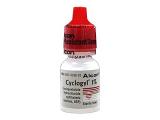
Cyclopentolate hydrochloride ophthalmic solution 1% is an anticholinergic agent indicated for inducing mydriasis (pupil dilation) and cycloplegia (paralysis of accommodation) during diagnostic procedures such as refraction and fundus examination, and for the treatment of inflammatory conditions of the uveal tract including iritis and iridocyclitis. Cyclopentolate works by blocking muscarinic receptors in the iris sphincter and ciliary muscle, leading to pupil dilation and temporary loss of accommodation. It is available only by prescription in Canada and is administered topically to the eye.
Usual adult dose: For refraction, 1 to 2 drops of cyclopentolate 1% are instilled into the eye(s); this may be repeated once after 5 to 10 minutes if necessary to achieve adequate cycloplegia. For uveitis, 1 drop is instilled 2 to 3 times daily, or as directed by an ophthalmologist. To minimize systemic absorption, patients should apply gentle pressure to the nasolacrimal sac (punctal occlusion) for 1 to 2 minutes after instillation. The tip of the container must not touch the eye or surrounding structures. Patients should be warned that vision will be blurred and they will be sensitive to light until the effects wear off. If more than one ophthalmic medication is used, they should be instilled at least 5 minutes apart. Contact lenses should be removed before instillation and not reinserted for at least 15 minutes.
Dosage form: Sterile ophthalmic solution: 1% (each mL contains 10 mg of cyclopentolate hydrochloride). Available in dropper bottles of 2 mL, 5 mL, or 15 mL. The solution may contain benzalkonium chloride as a preservative.
Onset of action: Mydriasis begins within 15 to 30 minutes after instillation, with peak effect at 30 to 60 minutes. Cycloplegia develops slightly more slowly and is usually maximal within 30 to 60 minutes. The onset is rapid, making it suitable for outpatient diagnostic procedures.
Duration of action: The mydriatic effect lasts approximately 6 to 12 hours, while cycloplegia may persist for up to 24 hours; some patients may experience residual accommodation impairment for up to 48 hours, especially with repeated doses. Patients should be advised not to drive or perform hazardous tasks until vision clears.
Alcohol recommendation: No direct interaction between topical cyclopentolate and alcohol is known. However, alcohol may worsen dizziness, drowsiness, or blurred vision associated with the medication, and patients should avoid alcohol until the effects on vision have resolved.
Most common side effects: Transient stinging or burning upon instillation, blurred vision, photophobia (light sensitivity), and mild conjunctival irritation. Systemic anticholinergic effects, although uncommon with topical use, may include dry mouth, flushing, tachycardia, drowsiness, and, rarely, confusion or hallucinations, especially in children and the elderly. Cyclopentolate is contraindicated in patients with known hypersensitivity to anticholinergic agents and in those with untreated narrow-angle glaucoma or anatomically narrow anterior chamber angles, as it may precipitate acute angle-closure glaucoma. It should be used with caution in patients with a history of glaucoma, in children, and in the elderly who are more sensitive to systemic effects. Patients should be observed for signs of systemic toxicity, such as ataxia, disorientation, or fever. The solution is for ocular use only and should be kept out of reach of children.
Would you like to try Cyclopentolate without a prescription?
Buy Generic Cyclopentolate (Cyclopentolate) without prescription in Canada
At our pharmacy, you can buy Cyclopentolate without a prescription, with discreet and anonymous packaging delivered within 5-14 days across Canada.
What is Cyclopentolate?
Cyclopentolate is an eye drop used to dilate the pupil and temporarily paralyze the focusing muscle of the eye. It belongs to a class of drugs called anticholinergics or muscarinic antagonists. When the doctor needs to examine the back of your eye, the retina and optic nerve, the pupil must be wide open. Cyclopentolate makes that happen. It also relaxes the ciliary muscle, which controls the lens shape for focusing. This is called cycloplegia, and it is necessary for accurate refraction in children, who can unconsciously focus and mask their true prescription. The drops are used during eye exams, before certain procedures, and sometimes to treat inflammation inside the eye. The effect begins within 30 to 60 minutes after instillation, peaks at about 30 to 60 minutes, and lasts for several hours, sometimes up to 24 hours. During this time, your vision will be blurry, especially up close, and your eyes will be sensitive to light. The 1% strength is the standard concentration for most uses. Cyclopentolate is not a treatment you use at home every day. It is a diagnostic tool applied in the clinic or prescribed for a specific short-term purpose.
Mechanism and Pharmacology
Cyclopentolate blocks muscarinic acetylcholine receptors in the sphincter muscle of the iris and in the ciliary muscle. The iris sphincter normally keeps the pupil small. When the receptors are blocked, the muscle relaxes, and the pupil dilates. The ciliary muscle normally contracts to thicken the lens for near vision. Blocking its receptors paralyzes the muscle, leaving the lens fixed for distance. This combination of pupil dilation and cycloplegia is what makes a thorough eye examination possible. Because cyclopentolate is applied topically, only a small amount is absorbed systemically, but that small amount can cause side effects elsewhere, especially in children and the elderly.
After instillation, cyclopentolate penetrates the cornea and reaches the iris and ciliary body. The onset of mydriasis, or pupil dilation, is about 15 to 30 minutes. The effect peaks at 30 to 60 minutes and lasts 6 to 24 hours. Cycloplegia, the loss of focusing, lasts a shorter time, usually 2 to 6 hours. The drug is metabolized in the liver and excreted in the urine. The systemic half-life is about 2 hours, but the ocular effects last much longer because the drug binds tightly to the receptors. In patients with darkly pigmented irises, the onset may be slightly slower and the effect shorter. In patients with light irises, the effect may be stronger and longer. The 1% strength is the standard concentration. A 0.5% strength is available for very young infants or when a shorter effect is desired. Cyclopentolate is often combined with phenylephrine, another dilating drop, to achieve maximal pupil dilation for examinations.
How to Use Cyclopentolate
Cyclopentolate is instilled by a healthcare professional during an eye examination. If you are instructed to use it at home, the dose is usually one drop in the affected eye or eyes, applied 30 to 60 minutes before the examination or procedure. Wash your hands before use. Tilt your head back, pull down your lower eyelid, and squeeze one drop into the pocket. Do not touch the eye with the dropper tip. Close your eye gently for 2 minutes, pressing on the inner corner to reduce systemic absorption. If both eyes are being dilated, repeat in the other eye. Do not rub your eyes. The drops may sting for a few seconds. The blurring of near vision and light sensitivity are expected and will wear off, but the timing varies. Do not drive or operate machinery until your vision has returned to normal, which may take several hours or longer. If you miss a dose and you are using it on a schedule, apply it as soon as you remember, but if it is close to the next dose, skip it. This is usually a single-use medication, so missing a dose is not a major concern. Do not use cyclopentolate more often than prescribed, because repeated doses can cause systemic toxicity, especially in children.
Side Effects of Cyclopentolate
Local side effects are expected and temporary. Stinging or burning when the drop goes in is common. Blurred vision, especially for near objects, is the main effect. Light sensitivity, because the dilated pupil lets in too much light, is also expected. Wear sunglasses after the drops are instilled. These effects usually resolve within 6 to 24 hours. In some people, the pupil may remain dilated for longer, especially with repeated doses. If you have narrow-angle glaucoma, cyclopentolate can precipitate an acute attack, causing severe eye pain, headache, nausea, and blurred vision. This is an emergency. Tell your doctor if you have a history of glaucoma before receiving these drops.
Systemic side effects occur when the drug is absorbed into the bloodstream. They are more common in children, the elderly, and people with light irises. Dry mouth, flushing, rapid heart rate, and restlessness can occur. In severe cases, confusion, hallucinations, seizures, and urinary retention have been reported. These are signs of systemic anticholinergic toxicity and require immediate medical attention. To reduce absorption, press on the inner corner of the eye for 2 minutes after instillation. Children are especially sensitive to these effects, and the 0.5% strength is often used in infants. If your child develops unusual behaviour, a rapid pulse, or a flushed face after the drops, contact the doctor.
High-Risk Groups (Elderly, Pregnancy)
Pregnancy. Cyclopentolate is pregnancy category C. There are no adequate studies in pregnant women. It is used during pregnancy only when clearly needed, such as for a necessary eye examination. The amount absorbed systemically is small, but caution is advised. Discuss with your obstetrician before the drops are used. Breastfeeding. It is not known whether cyclopentolate passes into breast milk. The manufacturer recommends caution. Because systemic absorption is low, the risk to the infant is minimal, but it is reasonable to withhold breastfeeding for a few hours after the drops are instilled. Talk to your doctor.
Elderly patients are more sensitive to the systemic anticholinergic effects. Confusion, disorientation, and urinary retention can occur, especially with repeated doses. The drops should be used with caution, and the punctal occlusion technique should be employed to reduce absorption. People with narrow-angle glaucoma should not receive cyclopentolate unless the angle is protected and the doctor has determined it is safe. Those with Down syndrome may be more sensitive to the pupil-dilating effect. Patients with a history of seizures or cardiac arrhythmias should use cyclopentolate cautiously, because the systemic effects can exacerbate these conditions. A complete eye and medical history is essential before using this drug.
Interaction With Activities (Driving, Alcohol)
Cyclopentolate causes significant blurred vision and light sensitivity that can last for many hours. You must not drive or operate machinery until your vision has fully recovered. This may take 6 to 24 hours, depending on the individual. Arrange for someone to drive you home after the examination. Alcohol can add to the systemic anticholinergic effects, increasing drowsiness and confusion. Avoid alcohol while the drops are active. If you are using cyclopentolate at home, plan to stay indoors or have assistance. Wear sunglasses to reduce light sensitivity, and avoid reading or other near tasks until the blur clears. The impairment is temporary, but it is real and dangerous if ignored.
Drug Interactions
Cyclopentolate can interact with other anticholinergic drugs. If you take antihistamines, tricyclic antidepressants, antipsychotics, or bladder medications like oxybutynin, the systemic effects of cyclopentolate can be amplified, leading to dry mouth, rapid heart rate, confusion, and urinary retention. This is a particular risk in the elderly. Combining cyclopentolate with other eye drops that have anticholinergic properties, like atropine or homatropine, can cause excessive pupil dilation and cycloplegia. Monoamine oxidase inhibitors (MAOIs) can also increase the effects. There are no significant interactions with most oral medications because the absorbed dose is small, but always tell your eye doctor about all medications and supplements you take before receiving cyclopentolate. The use of pilocarpine, a drop that constricts the pupil, can counteract cyclopentolate, but the two are not used together.
Alternative Options
Other mydriatic and cycloplegic agents exist. Tropicamide is another short-acting drop that dilates the pupil and causes cycloplegia, but its effect lasts only 4 to 6 hours, making it useful for routine exams where a quicker recovery is desired. Atropine is a long-acting agent used for treating inflammation and for penalization therapy in amblyopia, with effects lasting up to two weeks. Homatropine is intermediate in duration. Phenylephrine is a pure mydriatic that does not cause cycloplegia, so it is often combined with cyclopentolate or tropicamide to achieve maximal dilation without complete loss of focusing. The choice depends on the purpose. For a standard fundus exam, tropicamide and phenylephrine are often used together. For cycloplegic refraction in children, cyclopentolate is the preferred agent because its cycloplegia is more complete and reliable than tropicamide. For inflammatory conditions, atropine or homatropine may be chosen. Cyclopentolate occupies a middle ground, strong enough for accurate refraction but not as long-lasting as atropine.
INN, Brand Names, and Classification in Canada
INN (International Nonproprietary Name): Cyclopentolate hydrochloride
Available brand names in Canada: Cyclogyl, and generic cyclopentolate. Cyclogyl is the original brand from Alcon, now part of Novartis.
ATC code: S01FA04
Forms and strengths: Ophthalmic solution 0.5% and 1%. The 1% strength is the standard concentration for most uses. Available in bottles of 5 mL and 15 mL.
Manufacturers: Alcon Canada Inc. (Cyclogyl), and generic manufacturers including Sandoz Canada Inc. and Apotex Inc.
Registration status in Canada: Registered
Classification: Prescription (Rx)
Frequently Asked Questions
How long does the blurring last?
The blurring from cyclopentolate usually lasts 6 to 12 hours, but in some people, it can persist up to 24 hours. Near vision is affected more than distance vision. Light sensitivity also lasts for several hours. It is best to have someone drive you and to avoid reading or using screens until your vision clears.
Can cyclopentolate cause glaucoma?
It can trigger an attack of narrow-angle glaucoma in people who already have a shallow anterior chamber. This is a medical emergency with severe eye pain, headache, and nausea. If you have a history of glaucoma or a narrow angle, tell your doctor before the drops are used. Routine screening helps prevent this.
Why is cyclopentolate used in children?
Children's focusing muscles are very strong and can mask their true refractive error. Cyclopentolate temporarily paralyzes the focusing muscle, allowing the doctor to measure the exact prescription. This is essential for diagnosing conditions like amblyopia, or lazy eye. The effect wears off in a few hours to a day.
What should I do if my child becomes very agitated after the drops?
This could be a sign of systemic anticholinergic toxicity. The child may become restless, flushed, and have a rapid heart rate. Contact the doctor immediately. This is rare but more common in young children. The symptoms are temporary but need medical attention.
Can I wear contact lenses after cyclopentolate?
Do not wear contact lenses while your pupils are dilated and your vision is blurry. The lens can become uncomfortable and may be contaminated. Wait until the drops have worn off completely and your eyes feel normal before reinserting lenses.
Delivery Information Across Canada
We ship Cyclopentolate to all provinces and territories. Delivery times vary depending on how remote your location is:
- Ontario (Toronto, Ottawa, Mississauga): 5 to 7 days
- Quebec (Montreal, Quebec City, Laval): 5 to 7 days
- British Columbia (Vancouver, Victoria, Burnaby): 5 to 9 days
- Alberta (Calgary, Edmonton, Red Deer): 5 to 9 days
- Manitoba (Winnipeg, Brandon): 5 to 9 days
- Saskatchewan (Saskatoon, Regina): 5 to 9 days
- Nova Scotia (Halifax, Sydney): 5 to 9 days
- New Brunswick (Moncton, Fredericton): 5 to 9 days
- Newfoundland and Labrador (St. John's, Corner Brook): 7 to 14 days
- Prince Edward Island (Charlottetown): 7 to 14 days
- Yukon, Northwest Territories, Nunavut: 7 to 14 days
All shipments are packed discreetly with no branding or indication of contents on the outside.


| Shipping method | Delivery time | Price | |
 Delivery Delivery |
14-21 days | 14.95$ | Tracking# available in 4 days |
 Delivery Delivery |
9-14 days | 30$ | Tracking# available in 2 days |
- Shipping worldwide
- Confidentiality and anonymity guarantee
- Safe and secure
- Discrete looking packages
- Dispatch orders within 24 hours
- 100% success delivery


