


 Secure and Reliable
  High quality
  Worldwide shipping
  Bonuses and Discounts
  Money back Guarantee
 - Bestsellers
- Alcoholism
- COVID-19
- Allergy
- Anti Fungal
- Alzheimers
- Anti Viral
- Anti-Depressants
- Anti-Inflammatory
- Antibacterial
- Antiparasitic
- Antibiotics
- Arthritis
- Asthma
- Birth Control
- Blood Pressure
- Cancer
- Cardiovascular
- Cholesterol
- Diabetes
- Diuretics
- Erectile Dysfunction
- Eye Drop
- Gastro Health
- General Health
- Hair Loss
- Hepatitis C Virus (HCV)
- HIV
- Hormones
- Men's ED Packs
- Men's Health
- Mental Illness
- Motion Sickness
- Muscle Relaxant
- Pain Relief
- Parkinson’s Disease
- Veterinary Medicines
- Quit Smoking
- Vitamins
- Skin Care
- Sleeping Aids
- Weight Loss
- Women's Health
Generic Fusiderm B ( Betamethasone and Fusidic Acid )
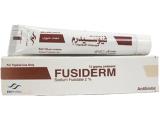
Buy Generic Fusiderm B (Betamethasone and Fusidic Acid) without prescription in Canada
In our Canadian pharmacy, you can buy Fusiderm B (Betamethasone and Fusidic Acid) without a prescription, with delivery across Canada within 5‑14 days. Discreet and anonymous packaging.
Fusiderm B is a topical combination product containing betamethasone valerate, a potent corticosteroid, and fusidic acid (as fusidic acid hemihydrate), an antibiotic. It is used to treat inflammatory skin conditions that are either infected or likely to become infected with bacteria susceptible to fusidic acid, such as eczematous dermatoses with secondary bacterial infection. Betamethasone works by reducing inflammation, redness, and itching through the suppression of multiple inflammatory pathways, while fusidic acid inhibits bacterial protein synthesis by binding to elongation factor G, thereby preventing the growth of Staphylococcus aureus and Streptococcus species.
Usual adult dose: Apply a thin layer of the cream or ointment to the affected area two to three times daily, gently rubbing it in. The treatment should not normally exceed 2 weeks, and the smallest amount that controls symptoms should be used. Avoid application on large areas, under occlusive dressings, or on the face, flexures, or genitals unless specifically directed by a physician. The hands should be washed after application unless the hands are the site being treated.
Dosage form: Topical cream or ointment containing betamethasone valerate 0.12% w/w (equivalent to 0.1% betamethasone) and fusidic acid 2% w/w (as fusidic acid hemihydrate).
Onset of action: Symptomatic improvement, particularly reduction of redness and itching, usually begins within 1 to 3 days of starting regular application. The anti‑infective effect of fusidic acid begins immediately upon contact with susceptible bacteria.
Duration of action: The clinical effect persists for several hours after each application, supporting two to three times daily dosing. To minimise the risk of skin atrophy and systemic side effects, treatment duration should be as short as possible, typically not exceeding 2 weeks.
Alcohol recommendation: Topically applied Fusiderm B has negligible systemic absorption, and no direct interaction between the cream and ingested alcohol is expected. However, excessive alcohol consumption can impair the immune response and may worsen certain inflammatory skin conditions, so moderation is advised.
Most common side effects: Local skin reactions including burning, irritation, pruritus (itching), dryness, and erythema at the application site. Prolonged use can cause skin atrophy, striae (stretch marks), telangiectasias, and perioral dermatitis. Rarely, systemic absorption of the corticosteroid can lead to hypothalamic‑pituitary‑adrenal (HPA) axis suppression, and the antibiotic component may cause contact dermatitis or, with prolonged use, selection of resistant organisms including fungi.
Would you like to try Fusiderm B (Betamethasone and Fusidic Acid) without a prescription?
General Information about Fusiderm B (Betamethasone and Fusidic Acid)
- INN (International Nonproprietary Name): Betamethasone (as betamethasone valerate) and Fusidic Acid (as fusidic acid hemihydrate)
- Brand names available in Canada: Fusiderm B is not a marketed brand in Canada. The combination of betamethasone and fusidic acid is not approved for sale by Health Canada. Products combining fusidic acid with a corticosteroid are available in Canada only as Fucidin® H (hydrocortisone acetate 1% and fusidic acid 2%), which contains a less potent corticosteroid. Fusiderm B, containing the more potent betamethasone, is an internationally sourced product supplied by our pharmacy through the international supply chain for personal importation.
- ATC code: D07CC01 (betamethasone; corticosteroids, potent, combinations with antibiotics)
- Dosage forms and strengths: Cream or ointment in tubes of 15 g, 30 g, or 60 g, containing betamethasone valerate equivalent to 0.12% betamethasone (equivalent to 0.1% betamethasone base) and fusidic acid hemihydrate equivalent to 2% fusidic acid.
- Manufacturers in Canada: None. Fusiderm B is not manufactured in Canada. It is produced internationally by various pharmaceutical companies (e.g., in India, Europe) and is imported for personal use.
- Registration status in Canada: Not marketed in Canada. No Health Canada Notice of Compliance has been issued for this combination product. The individual active ingredients are available in other formulations: betamethasone valerate alone as a topical corticosteroid (e.g., Betnovate®) and fusidic acid alone or with hydrocortisone (Fucidin® H). The product is available internationally and imported for personal use under a valid prescription.
- OTC / Rx classification: Prescription only (Rx). A valid prescription from a licensed Canadian healthcare professional is required for personal importation.
Mechanism of Action and Pharmacology
Fusiderm B combines two active agents with complementary mechanisms. Betamethasone valerate is a synthetic glucocorticoid and a potent topical corticosteroid. It exerts its anti‑inflammatory, antipruritic, and vasoconstrictive effects by binding to intracellular glucocorticoid receptors, leading to the modulation of gene transcription. This results in the inhibition of phospholipase A2, which reduces the formation of prostaglandins and leukotrienes, and the suppression of the migration of polymorphonuclear leukocytes, fibroblasts, and other inflammatory cells. Fusidic acid is a fusidane antibiotic that acts by inhibiting bacterial protein synthesis. It binds to elongation factor G (EF‑G) in the ribosome, preventing the translocation step and thereby blocking peptide chain elongation. It is primarily active against Gram‑positive bacteria, including Staphylococcus aureus and Streptococcus species, which are common pathogens in infected eczematous skin. Topical application of the combination ensures high local concentrations of both agents with minimal systemic absorption when used appropriately on small areas. The corticosteroid component reduces inflammation and allows the antibiotic to penetrate infected skin more effectively.
Indications
- Treatment of inflammatory skin disorders that are infected or likely to become infected with bacteria susceptible to fusidic acid, such as infected eczema, infected contact dermatitis, infected seborrhoeic dermatitis, and impetiginized eczema.
- Secondary bacterial skin infections complicating corticosteroid‑responsive dermatoses, where both anti‑inflammatory and antimicrobial effects are required.
- Not recommended for primary bacterial skin infections (e.g., impetigo) that do not require a corticosteroid, for which fusidic acid alone or an appropriate systemic antibiotic should be used.
- Not for use on the face, periorbital area, perioral area, axillae, or groin unless under close medical supervision, due to the increased risk of corticosteroid‑induced skin atrophy and telangiectasias in these sensitive areas.
- Not indicated for use in children under 1 year of age, and caution is advised in older children.
Important Warnings and Precautions
At‑risk groups
- Pregnancy: Topical corticosteroids should not be used extensively in pregnancy, i.e., in large amounts or for prolonged periods. Betamethasone and fusidic acid cross the placenta; however, systemic absorption following appropriate topical use is minimal. Fusiderm B should be used during pregnancy only if the potential benefit clearly outweighs the potential risk. Avoid use on large areas, under occlusion, or for extended periods.
- Breastfeeding: Both betamethasone and fusidic acid are excreted in breast milk after systemic administration. After topical application, the amounts are negligible when applied to small areas. Application to the nipple or areola should be avoided. Wash hands thoroughly before handling the infant. Use during breastfeeding only if clearly necessary and for the shortest possible duration.
- Paediatrics (< 1 year): Safety and efficacy have not been established in infants under 1 year. Children, especially infants, are at greater risk of systemic absorption and HPA axis suppression because of their higher body surface area to weight ratio. Use in children should be limited to the smallest effective amount and for the shortest possible time.
- Elderly: Elderly patients are more susceptible to corticosteroid‑induced skin atrophy and fragility. The lowest effective dose should be used for the shortest possible time. Monitor closely for thinning of the skin, purpura, and delayed wound healing.
- HPA axis suppression: Prolonged use of topical corticosteroids, especially under occlusive dressings or on large surface areas, can lead to systemic absorption and reversible suppression of the hypothalamic‑pituitary‑adrenal axis, resulting in glucocorticosteroid insufficiency and Cushing’s syndrome. Treatment should be withdrawn gradually.
- Visual disturbance: Systemic and topical (including ophthalmic) corticosteroid use may be associated with central serous chorioretinopathy, cataract, and glaucoma. If blurred vision or other visual disturbances occur, the patient should be evaluated by an ophthalmologist.
- Resistance and superinfection: Prolonged use of fusidic acid may lead to the development of antibiotic‑resistant staphylococci. As with all topical antibiotics, the product should not be used for longer than 2 weeks. If there is no clinical improvement within 7 days, the diagnosis should be reviewed. Overgrowth of non‑susceptible organisms, including fungi, may occur. If superinfection develops, appropriate therapy should be initiated.
- Allergy: Do not use Fusiderm B if you have a known hypersensitivity to betamethasone, fusidic acid, or any excipient in the formulation.
Driving and alcohol
Topical application of Fusiderm B has no known influence on the ability to drive or operate machinery. There is no clinically relevant interaction between topically applied betamethasone/fusidic acid and ingested alcohol. However, excessive alcohol consumption can exacerbate underlying skin conditions and impair wound healing, so moderation is recommended.
Dosage Instructions
- Standard adult dose: Apply a thin layer of Fusiderm B to the affected skin two to three times daily. Gently massage the cream or ointment into the skin until it disappears. Do not cover with an occlusive dressing unless directed by a physician.
- Duration of therapy: The recommended maximum treatment duration is 2 weeks. If the condition has not improved within 7 days, the diagnosis should be reassessed, and alternative therapy considered. Prolonged or repeated courses increase the risk of corticosteroid side effects and antibiotic resistance.
- Administration: Wash and dry the affected area thoroughly before application. Apply a small amount and rub in gently. Wash hands immediately after use, unless the hands are the treatment site. Avoid contact with the eyes, mucous membranes, and open wounds. Do not use on the face, flexures, or genitals unless under strict medical supervision.
- Missed dose: If a dose is missed, apply it as soon as remembered, then continue with the regular schedule. Do not apply a double amount to make up for a missed dose.
Side Effects and Contraindications
- Common side effects (incidence 1‑10%): Application site reactions including burning, irritation, pruritus (itching), dryness, and erythema. These are usually mild and transient.
- Uncommon side effects (0.1‑1%): Allergic contact dermatitis, folliculitis, maceration of the skin, and secondary infection.
- Rare but serious side effects: With prolonged or extensive use: skin atrophy, striae, telangiectasias, purpura, hypertrichosis, perioral dermatitis, acneiform eruptions, and masking or worsening of infections. Systemic effects due to corticosteroid absorption include Cushing’s syndrome, hyperglycaemia, glycosuria, hypertension, and HPA axis suppression, which may be irreversible in children. Topical fusidic acid can, in rare cases, cause contact urticaria or anaphylaxis.
- Contraindications: Hypersensitivity to betamethasone valerate, fusidic acid, or any component of the formulation. Primary bacterial, viral (e.g., herpes simplex, varicella), or fungal skin infections without appropriate antimicrobial coverage. Tuberculosis of the skin. Perioral dermatitis, rosacea, and acne vulgaris. Application to the eyes, open wounds, or mucous membranes. Not for use on the breasts prior to breastfeeding.
Drug Interactions
- No known clinically significant drug interactions: When used topically as directed, systemic absorption of both components is minimal, making pharmacokinetic drug interactions with oral or injectable medications unlikely. However, concurrent use of other topical products on the same area should be avoided unless directed by a physician, as they may alter the absorption or potency of the corticosteroid.
- Systemic corticosteroids and immunosuppressants: Additive immunosuppressive effects may occur if Fusiderm B is used extensively in patients already taking systemic corticosteroids or other immunosuppressive drugs.
- Laboratory test interactions: Topical corticosteroids may affect the results of the ACTH stimulation test when used on large body surface areas.
Practical Advice
- Administration: Use Fusiderm B exactly as prescribed. Apply a thin layer only to the affected skin; a fingertip unit (the amount squeezed from a standard tube along the adult fingertip) can guide the quantity needed for an area the size of the palm. Do not bandage or wrap the treated area. Avoid use on the face, groin, or underarms unless specifically told by your doctor.
- Monitoring: If the infection does not improve or worsens within 7 days, or if new symptoms (such as redness spreading, pus, or pain) develop, consult your doctor. For prolonged therapy, monitor for signs of skin thinning, easy bruising, or stretch marks. In children, growth and development should be monitored if treatment extends beyond the recommended duration.
- Storage: Store at room temperature (15‑30 °C), away from direct heat and moisture. Do not freeze. Keep the tube tightly capped. Discard any unused cream or ointment after the prescribed treatment course. Keep out of the reach and sight of children.
- Lifestyle: Maintain good skin hygiene. Avoid scratching or rubbing the affected area. Use non‑perfumed moisturizers to support the skin barrier. Avoid triggers (allergens, irritants) that may exacerbate the underlying dermatitis. Do not share topical medications with others.
- When to seek medical review: Contact your doctor promptly if you develop signs of a serious allergic reaction (widespread rash, swelling of the face or throat, difficulty breathing), visual disturbances, or signs of systemic corticosteroid effects (unexplained weight gain, rounding of the face, muscle weakness, severe fatigue).
- Disposal: Return unused or expired medication to a pharmacy for safe disposal. Do not flush down the toilet or discard in household waste.
Alternative Medications
- Fucidin® H (hydrocortisone acetate 1% / fusidic acid 2%): Available in Canada, this combines a mild corticosteroid (hydrocortisone) with fusidic acid. It is suitable for mild to moderate infected eczema when a less potent steroid is appropriate. It is the standard topical combination antibiotic‑steroid available in Canada.
- Betamethasone valerate cream/ointment (Betnovate®): A potent topical corticosteroid alone, used when infection is not present or is being treated separately. Available as a prescription medicine in Canada.
- Fusidic acid cream/ointment (Fucidin®): A topical antibiotic alone for primary bacterial skin infections such as impetigo, when no corticosteroid is needed. Available by prescription.
- Mupirocin calcium cream (Bactroban®): Another topical antibiotic effective against Staphylococcus and Streptococcus, used for impetigo and other superficial skin infections. No corticosteroid component.
- Other combined topical corticosteroid‑antibiotic preparations: In international markets, combinations such as betamethasone 0.05% / clotrimazole 1% / gentamicin 0.1% (e.g., Triderm) or betamethasone / neomycin are used; however, these are not approved in Canada. Patients requiring such combinations may need to use a separate steroid and antibiotic, or consult a dermatologist for guidance.
Clinical Efficacy
The combination of betamethasone and fusidic acid has been evaluated in several clinical studies for the treatment of infected eczematous dermatoses. In a randomized controlled trial, betamethasone 0.1% / fusidic acid 2% cream applied twice daily for 7 days resulted in a clinical cure or significant improvement in approximately 85‑90% of patients with secondarily infected eczema, compared with a vehicle or single‑component therapy. The corticosteroid rapidly reduces erythema, oedema, and pruritus, while the fusidic acid eradicates the bacterial pathogen, predominantly Staphylococcus aureus. The product is well tolerated, and local adverse effects are similar to those of the individual components. However, due to the potent steroid component, extended use carries the risk of skin atrophy, striae, and systemic absorption. Therefore, treatment is limited to short courses of no more than 2 weeks. The product is widely used in many countries as a convenient single‑agent therapy for infected dermatitis, though in Canada, the analogous product Fucidin H (with hydrocortisone) is preferred for mild to moderate cases because of the lower potency of the corticosteroid. Fusiderm B is reserved for more inflammatory presentations where a potent corticosteroid is justified.
Important:
Fusiderm B (betamethasone/fusidic acid) is a prescription topical medication that should be used only under the supervision of a qualified healthcare professional. It contains a potent corticosteroid; prolonged use, especially on large areas, under occlusion, or in children, can lead to systemic absorption and serious side effects, including adrenal suppression. Do not use this medication for longer than 2 weeks, on the face, or in skin folds unless directly instructed by your doctor. If the infection worsens or does not improve within 7 days, seek medical review. Avoid contact with the eyes. If you experience blurred vision, widespread rash, or signs of an allergic reaction, discontinue use and seek immediate medical attention. This product is not approved for marketing in Canada and is imported for personal use under a valid prescription. This information is not a substitute for professional medical advice, diagnosis, or treatment.


| Shipping method | Delivery time | Price | |
 Delivery Delivery |
14-21 days | 14.95$ | Tracking# available in 4 days |
 Delivery Delivery |
9-14 days | 30$ | Tracking# available in 2 days |
- Shipping worldwide
- Confidentiality and anonymity guarantee
- Safe and secure
- Discrete looking packages
- Dispatch orders within 24 hours
- 100% success delivery


