


 Secure and Reliable
  High quality
  Worldwide shipping
  Bonuses and Discounts
  Money back Guarantee
 - Bestsellers
- Alcoholism
- COVID-19
- Allergy
- Anti Fungal
- Alzheimers
- Anti Viral
- Anti-Depressants
- Anti-Inflammatory
- Antibacterial
- Antiparasitic
- Antibiotics
- Arthritis
- Asthma
- Birth Control
- Blood Pressure
- Cancer
- Cardiovascular
- Cholesterol
- Diabetes
- Diuretics
- Erectile Dysfunction
- Eye Drop
- Gastro Health
- General Health
- Hair Loss
- Hepatitis C Virus (HCV)
- HIV
- Hormones
- Men's ED Packs
- Men's Health
- Mental Illness
- Motion Sickness
- Muscle Relaxant
- Pain Relief
- Parkinson’s Disease
- Veterinary Medicines
- Quit Smoking
- Vitamins
- Skin Care
- Sleeping Aids
- Weight Loss
- Women's Health
Generic Retin-A Cream ( Tretinoin )
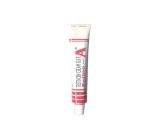
Buy Generic Retin-A Cream (Tretinoin) without prescription in Canada
In our Canadian pharmacy, you can buy Retin-A Cream (Tretinoin) without a prescription, with delivery across Canada within 5-14 days. Discreet and anonymous packaging.
Retin-A Cream (tretinoin) is a topical retinoid, a derivative of vitamin A, used primarily for the treatment of mild to moderate acne vulgaris. It works by binding to retinoic acid receptors in the skin, which normalizes the growth and differentiation of keratinocytes, promotes the shedding of dead skin cells, and prevents the formation of comedones (blackheads and whiteheads). This action helps to unclog pores, reduce inflammation, and smooth the skin's surface, leading to clearer skin over time.
Usual adult dose: A thin layer of Retin-A Cream should be applied to the affected areas once daily, at bedtime. The face should be washed with a mild, non-medicated cleanser, rinsed with warm water, and patted dry. Wait 20 to 30 minutes after washing to ensure the skin is completely dry, as applying tretinoin to damp skin can increase irritation. A pea-sized amount is usually sufficient to cover the entire face. Treatment is usually started with the lower concentration (0.025%) and may be increased to 0.05% once the skin has adapted, as directed by a physician. Visible improvement may take several weeks, and consistent use is required for maintenance.
Dosage form: Topical cream in strengths of 0.025% and 0.05% (tretinoin by weight).
Onset of action: Some improvement in acne lesions may be seen within 2 to 4 weeks, but the full therapeutic effect typically requires 6 to 12 weeks of continuous use. An initial "purging" phase, where existing microcomedones come to the surface and cause temporary worsening of acne, can occur in the first few weeks; this is normal and usually subsides with continued therapy.
Duration of action: The clinical effect on acne is maintained only with regular ongoing use. If treatment is discontinued, the skin slowly returns to its pre-treatment condition over several weeks to months, and acne may recur. For long-term management, maintenance application (often at a reduced frequency) is common.
Alcohol recommendation: There is no known direct interaction between topically applied tretinoin and the consumption of alcohol. However, alcohol can dehydrate the skin and may exacerbate the dryness and irritation that often occur during tretinoin therapy. Limiting alcohol intake and maintaining adequate hydration can help support skin health during treatment.
Most common side effects: Local skin reactions including redness, scaling, dryness, itching, and a mild burning or stinging sensation, especially during the first few weeks of use. These effects are usually mild and often improve as the skin adjusts. Increased sensitivity to sunlight and a heightened risk of sunburn are significant concerns; patients must use a broad-spectrum sunscreen (SPF 30 or higher) daily and wear protective clothing. An initial acne flare-up is also common.
Would you like to try Retin-A Cream (Tretinoin) without a prescription?
General Information about Retin-A Cream (Tretinoin)
- INN (International Nonproprietary Name): Tretinoin (all-trans retinoic acid)
- Brand names available in Canada: Retin-A® Cream (Bausch Health, Canada Inc.), Vitamin A Acid Cream (generic), Stieva-A® Cream (generic). Tretinoin is also available as a gel and a microsphere gel (Retin-A Micro®).
- ATC code: D10AD01 (tretinoin; topical anti-acne preparations)
- Dosage forms and strengths: Cream: 0.025% and 0.05% (tretinoin). The 0.025% strength is typically used for initial therapy or for those with sensitive skin; the 0.05% strength is used when a stronger response is needed or for maintenance.
- Manufacturers in Canada: Bausch Health, Canada Inc. (Retin-A), and generic manufacturers such as Taro Pharmaceuticals and Apotex Inc. (Stieva-A).
- Registration status in Canada: Approved by Health Canada. Marketed (DINs: 02014357 for Retin-A 0.025% cream, 02014365 for Retin-A 0.05% cream).
- OTC / Rx classification: Prescription only (Rx). Schedule I drug under the Controlled Drugs and Substances Act. A valid prescription from a licensed Canadian healthcare professional is required.
Mechanism of Action and Pharmacology
Tretinoin is a retinoid that modulates gene expression by binding to nuclear retinoic acid receptors (RARs) and retinoid X receptors (RXRs) in the skin. This binding leads to a reduction in the cohesiveness of follicular epithelial cells, which promotes the expulsion of existing comedones and inhibits the formation of new ones. It also stimulates the proliferation and turnover of epidermal cells, which helps to normalize keratinization and clear obstructed pores. In the dermis, tretinoin can upregulate collagen synthesis, which contributes to its effects on photoaged skin, but its primary approved indication is for acne. The drug is rapidly metabolized in the skin, and systemic absorption after topical application is minimal (less than 2% of the applied dose reaches the circulation). The absorbed portion is metabolized in the liver and excreted in bile and urine. Because tretinoin is light-sensitive, it is applied at night to avoid degradation by sunlight.
Indications
- Acne vulgaris: Topical treatment of mild to moderate acne, including comedonal, papular, and pustular lesions. Retin-A is considered a first-line topical therapy for comedonal acne and may be used in combination with topical antimicrobials for inflammatory acne.
- Off-label use: Treatment of photodamaged skin (fine wrinkles, mottled hyperpigmentation, roughness) as part of a comprehensive skin care and sun avoidance program. This use is often with the 0.05% cream and requires long-term application.
- Retin-A is not indicated for severe nodulocystic acne, which often requires systemic therapy. Safety and efficacy in children under 12 years of age have not been established for the cream formulation.
Important Warnings and Precautions
At-risk groups
- Pregnancy: Tretinoin is contraindicated during pregnancy. Although systemic absorption from topical application is minimal, there have been rare reports of birth defects consistent with retinoid embryopathy in infants exposed to topical tretinoin in the first trimester. A pregnancy test should be considered in women of childbearing potential before starting therapy, and effective contraception should be used. If pregnancy occurs, treatment must be discontinued immediately.
- Breastfeeding: It is not known whether tretinoin is excreted in human milk. Because of the potential for serious adverse reactions in a nursing infant, breastfeeding is not recommended during treatment. A decision must be made whether to discontinue breastfeeding or to avoid the medication.
- Paediatrics (< 12 years): Safety and efficacy in children under 12 years have not been established for the cream. Use in younger children should be under specialist supervision.
- Elderly: No specific dose adjustment is required based on age alone. However, elderly patients may have thinner, more fragile skin and may be more susceptible to retinoid-induced irritation. The lower strength (0.025%) and less frequent application (e.g., every other night) may be preferred at the start of therapy.
- Sun exposure and sensitivity: Tretinoin increases the skin's sensitivity to ultraviolet (UV) light. Patients must avoid excessive or prolonged exposure to sunlight and UV lamps (tanning beds). A broad-spectrum sunscreen (SPF 30 or higher) and protective clothing must be used daily throughout treatment. Patients who have a sunburn should not use Retin-A until the burn has fully healed. Extreme weather conditions, such as wind and cold, may also be more irritating to patients using tretinoin.
- Eczematous or abraded skin: Tretinoin should not be applied to eczematous, sunburned, abraded, or otherwise irritated skin because of the risk of severe exacerbation. Application to the angles of the nose, mouth, and eyes should be avoided because these areas are particularly sensitive.
- Concomitant topical products: Use of other potentially irritating topical products (e.g., medicated or abrasive soaps, cleansers, cosmetics with strong drying effects, products containing benzoyl peroxide, salicylic acid, sulfur, resorcinol, or high concentrations of alcohol) should be avoided or minimized, as they may cause additive skin irritation. A gentle, non-comedogenic moisturizer can be used to mitigate dryness.
- Allergy: Do not use Retin-A if you have a known hypersensitivity to tretinoin, other retinoids, or any excipient in the cream formulation.
Driving and alcohol
Retin-A is applied topically and is not known to impair the ability to drive or operate machinery. There is no direct interaction between topical tretinoin and ingested alcohol. However, because alcohol can dehydrate the skin and may exacerbate the drying effects of tretinoin, it is advisable to consume alcohol in moderation and maintain adequate hydration to support the skin barrier.
Dosage Instructions
- Standard adult regimen: Apply a thin layer of Retin-A Cream once daily, at night, to the entire affected area. The skin should be cleansed with a mild, non-irritating cleanser and thoroughly dried. Wait at least 20-30 minutes after washing before applying the cream to minimize irritation. Squeeze a pea-sized amount (about 1 cm of cream) onto a fingertip; this is generally enough to cover the whole face. Dot the cream onto the forehead, cheeks, chin, and nose, then gently spread evenly, avoiding the eyes, nostrils, mouth, and mucous membranes. Wash hands after application.
- Strength selection: Treatment is usually initiated with the 0.025% cream to allow the skin to develop tolerance. If no significant irritation occurs after several weeks, the strength may be increased to 0.05% for enhanced efficacy. Patients with sensitive skin or a history of retinoid intolerance should start with the lower concentration. Some patients may remain on the 0.025% strength long-term if it is effective and well tolerated.
- Frequency titration: For patients who experience significant irritation (marked redness, peeling, or burning), therapy may be initiated on an every-other-night or every-third-night basis, gradually increasing to nightly use as tolerated. A moisturizer applied in the morning (or after the cream has been absorbed) can help alleviate dryness.
- Duration of therapy: Retin-A is intended for long-term management of acne. Improvement is usually seen after 6-12 weeks, and continued use is needed to maintain remission. Once the acne is controlled, the application frequency may be reduced to 2-3 times per week for maintenance, as directed by a physician.
- Missed dose: If an evening application is missed, skip the missed dose and resume the regular schedule the following night. Do not apply a double amount to make up for a missed dose.
Side Effects and Contraindications
- Very common side effects (≥ 10%): Local skin reactions - including erythema (redness), scaling, dryness, pruritus (itching), and a sensation of warmth or stinging - occur in most patients, especially during the first 2-4 weeks of therapy. These effects are part of the expected "retinoid reaction" and usually diminish with continued use and appropriate moisturization.
- Common side effects (1-10%): Initial acne flare ("purging") as microcomedones surface, increased sensitivity to sunlight (photosensitivity), and mild peeling. Temporary hyperpigmentation or hypopigmentation has been reported.
- Less common but serious side effects: Severe or persistent irritation, blistering, crusting, or swelling. Allergic contact dermatitis is rare. Retinoid dermatitis (a severe irritation) can occur if the product is applied too frequently or to damp skin. In such cases, the frequency of application should be reduced, or treatment temporarily discontinued. Very rare cases of corneal thinning have been reported with ocular exposure.
- Contraindications: Hypersensitivity to tretinoin or any excipient (including butylated hydroxytoluene, isopropyl myristate, polyoxyl 40 stearate, stearic acid, stearyl alcohol, xanthan gum). Pregnancy and breastfeeding. Use on sunburned, eczematous, or otherwise irritated skin. Concomitant use with other potentially irritating topical products without medical advice.
Drug Interactions
- Topical products: Concomitant use of other potentially irritating topical agents - including medicated or abrasive soaps, cleansers, cosmetics with strong drying effects, astringents, peeling agents, and products containing benzoyl peroxide, salicylic acid, glycolic acid, alpha-hydroxy acids, or high concentrations of alcohol - should be used with caution because of possible additive irritant effects. If such products are necessary, they should be used at a different time of day (e.g., benzoyl peroxide in the morning, tretinoin at night) unless otherwise directed.
- Photosensitizing medications: Patients taking systemic medications known to cause photosensitivity (e.g., tetracyclines, fluoroquinolones, thiazide diuretics, sulfonamides, phenothiazines) should exercise additional caution with sun protection.
- Topical corticosteroids: Concurrent use may mask or alter the retinoid reaction. Use under medical guidance only.
- Systemic retinoids: Combined use of topical tretinoin and oral retinoids (e.g., isotretinoin, acitretin) may increase the risk of skin irritation and systemic retinoid toxicity. Such combinations should generally be avoided unless specifically directed by a physician.
- Other topical medications: Do not use other topical prescription products on the same areas without consulting a physician.
Practical Advice
- Administration: Apply Retin-A Cream only at night. Wash the face gently with a mild cleanser and lukewarm water, then pat dry. Wait at least 20-30 minutes to ensure the skin is completely dry; applying the cream to damp skin can significantly increase irritation. Use only a pea-sized amount for the entire face. Avoid the delicate skin around the eyes, lips, and nostrils. Wash hands immediately after applying. Do not use more often or in larger amounts than prescribed; this will not speed results and will increase irritation.
- Monitoring: No routine laboratory monitoring is required. Patients should self-monitor for signs of excessive irritation, sunburn, or allergic reaction. If irritation is severe (persistent burning, blistering, crusting), reduce application frequency, take a short break from the medication, or consult the prescribing physician. The initial acne flare is normal but if it is severe or persists beyond a few weeks, contact your doctor.
- Storage: Store at room temperature (15-30 °C) in a tightly closed tube, protected from light and moisture. Do not freeze. Keep out of the reach and sight of children. Tretinoin is light-sensitive; keep the tube in its original carton.
- Sun protection: Use of an effective broad-spectrum sunscreen (SPF 30 or higher) every morning is mandatory while using Retin-A, even on cloudy days. Wear protective clothing, a wide-brimmed hat, and sunglasses. Avoid sunlamps, tanning beds, and prolonged sun exposure. A sunburn can cause severe irritation and will set back treatment progress.
- Lifestyle: For best results, integrate Retin-A into a simple, gentle skincare routine that includes a non-comedogenic moisturizer. Avoid waxing, dermabrasion, or laser treatments on the treated area while using tretinoin, as the skin is more fragile. Do not share your medication. If you become pregnant or plan to become pregnant, discontinue the cream immediately and inform your physician.
- Disposal: Return unused or expired cream to a pharmacy for safe disposal. Do not flush down the toilet or discard in household waste.
Alternative Medications
- Adapalene (Differin®): A synthetic retinoid that is more stable and less irritating than tretinoin, available over the counter in a 0.1% gel formulation. It is effective for mild to moderate acne and is often recommended for patients who cannot tolerate tretinoin.
- Tazarotene (Tazorac®): A prescription retinoid that is more potent than tretinoin, used for moderate acne and psoriasis. It can be more irritating but may be more effective for some patients.
- Benzoyl peroxide: An over-the-counter antimicrobial and keratolytic agent that is a first-line treatment for mild acne. It works through oxidative killing of Cutibacterium acnes and mild exfoliation, without the retinoid side-effect profile.
- Topical antibiotics (clindamycin, erythromycin): Used in combination with benzoyl peroxide or a retinoid for inflammatory acne. They reduce bacterial colonization and inflammation but do not affect comedones.
- Azelaic acid (Finacea®): A topical agent with anti-inflammatory, comedolytic, and mild antimicrobial properties, often used when retinoids are not tolerated, especially in patients with concurrent hyperpigmentation.
- Salicylic acid and glycolic acid: Over-the-counter chemical exfoliants that help unclog pores and reduce inflammation. They are less potent than retinoids but can be effective for mild acne.
- Oral therapies: For moderate to severe acne unresponsive to topicals, oral antibiotics (doxycycline, minocycline), hormonal therapy (combined oral contraceptives, spironolactone), or isotretinoin (Accutane®) are options under specialist care.
Clinical Efficacy
Tretinoin has been a cornerstone of acne therapy since its FDA approval in the 1970s. Multiple randomised, vehicle-controlled trials have demonstrated that tretinoin 0.025% and 0.05% cream significantly reduces both inflammatory and non-inflammatory lesion counts compared with placebo. In a 12-week pivotal study, the 0.05% cream produced a mean reduction in total acne lesions of approximately 50-60%, with visible improvement beginning as early as week 2. The lower 0.025% strength is similarly effective and often preferred for initial therapy because of its more favourable irritation profile. Tretinoin is particularly effective for comedonal acne and helps to prevent the formation of new lesions when used regularly. Its comedolytic and anti-comedogenic properties make it a preferred first-line agent, often used in combination with topical antimicrobials for optimal results. Tretinoin is also a fundamental component of long-term maintenance therapy for acne, as discontinuation leads to a gradual return of microcomedone formation and recurrence of acne. In Canada, tretinoin cream remains a first-line prescription retinoid for the treatment of acne vulgaris and is recommended in clinical practice guidelines from the Canadian Dermatology Association.
Important:
Retin-A Cream (tretinoin) is a prescription medication that should be used only under the supervision of a qualified healthcare professional. It is for external use only. This medication can make the skin very sensitive to sunlight; you must use a broad-spectrum sunscreen (SPF 30 or higher) every morning and avoid tanning beds and sun exposure. Avoid applying it to the eyes, mouth, nostrils, and other sensitive areas. Do not use Retin-A if you are pregnant, may become pregnant, or are breastfeeding. If pregnancy occurs, discontinue the cream immediately. An initial acne flare and skin redness, peeling, and dryness are common and usually improve with time, but if severe irritation occurs, reduce the frequency of application or consult your doctor. Do not apply the cream to skin that is sunburned, windburned, or otherwise broken. This information is not a substitute for professional medical advice, diagnosis, or treatment.


| Shipping method | Delivery time | Price | |
 Delivery Delivery |
14-21 days | 14.95$ | Tracking# available in 4 days |
 Delivery Delivery |
9-14 days | 30$ | Tracking# available in 2 days |
- Shipping worldwide
- Confidentiality and anonymity guarantee
- Safe and secure
- Discrete looking packages
- Dispatch orders within 24 hours
- 100% success delivery


