


 Secure and Reliable
  High quality
  Worldwide shipping
  Bonuses and Discounts
  Money back Guarantee
 - Bestsellers
- Alcoholism
- COVID-19
- Allergy
- Anti Fungal
- Alzheimers
- Anti Viral
- Anti-Depressants
- Anti-Inflammatory
- Antibacterial
- Antiparasitic
- Antibiotics
- Arthritis
- Asthma
- Birth Control
- Blood Pressure
- Cancer
- Cardiovascular
- Cholesterol
- Diabetes
- Diuretics
- Erectile Dysfunction
- Eye Drop
- Gastro Health
- General Health
- Hair Loss
- Hepatitis C Virus (HCV)
- HIV
- Hormones
- Men's ED Packs
- Men's Health
- Mental Illness
- Motion Sickness
- Muscle Relaxant
- Pain Relief
- Parkinson’s Disease
- Veterinary Medicines
- Quit Smoking
- Vitamins
- Skin Care
- Sleeping Aids
- Weight Loss
- Women's Health
Generic Sporanox ( Itraconazole )
Sporanox (itraconazole) is a synthetic triazole antifungal agent indicated for the treatment of systemic fungal infections, including blastomycosis, histoplasmosis, aspergillosis, and onychomycosis (fungal nail infection). It works by inhibiting the fungal cytochrome P450 enzyme lanosterol 14α-demethylase, which is essential for the synthesis of ergosterol, a key component of the fungal cell membrane. Depletion of ergosterol leads to increased membrane permeability, leakage of cellular contents, and ultimately fungal cell death. Itraconazole is available as capsules and oral solution; the capsule formulation requires gastric acidity for optimal absorption and is therefore used for systemic and nail infections, while the oral solution is used for oropharyngeal and esophageal candidiasis.
Usual adult dose: For most systemic fungal infections, the recommended dose is 100 mg to 200 mg once or twice daily depending on the infection and severity. For onychomycosis, a pulse regimen is used: 200 mg (two 100 mg capsules) twice daily for 1 week, followed by 3 weeks off; this cycle is repeated for 2 months for fingernail infections and 3 months for toenail infections. Capsules must be taken with a full meal to enhance absorption, and they should be swallowed whole. In patients with reduced gastric acid (e.g., those taking proton pump inhibitors or H2 blockers), absorption is impaired; an acidic beverage such as a cola may help. The 100 mg capsule is the standard formulation. The maximum recommended dose is 400 mg per day, except in life-threatening infections where up to 600 mg per day has been used under specialist supervision. If a dose is missed, it should be taken as soon as remembered, but two doses should not be taken at the same time. No dose adjustment is required in renal impairment, but caution is advised; in hepatic impairment, dose reduction may be necessary.
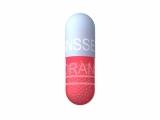
Dosage form: Oral capsules: 100 mg (blue and pink, size 0, imprinted with "JANSSEN" and "SPORANOX"). Each capsule contains 100 mg of itraconazole in a pellet formulation for optimal absorption. Available in blister packs of 28 capsules.
Onset of action: Steady-state plasma concentrations are achieved after approximately 15 days of continuous dosing. For onychomycosis, visible improvement in nail appearance may not be apparent for several months because the nail must grow out; clinical cure is assessed 9 to 12 months after initiation of therapy. For systemic infections, clinical response may begin within the first 2 weeks of therapy.
Duration of action: The elimination half-life of itraconazole is approximately 21 hours after a single dose and increases to 30 to 40 hours at steady state. The antifungal effect persists after the last dose due to accumulation in tissues, including skin and nails. Pulse therapy for onychomycosis relies on the persistence of drug in the nail matrix for weeks after each pulse.
Alcohol recommendation: Alcohol should be avoided during treatment with Sporanox. Itraconazole is extensively metabolized by the liver and can cause hepatotoxicity, including rare cases of fatal liver failure. Concurrent alcohol consumption may exacerbate hepatic injury and increase the risk of serious liver toxicity. Patients should be counselled to abstain from alcohol during therapy and to report any signs of liver dysfunction, such as fatigue, dark urine, jaundice, or abdominal pain.
Most common side effects: Gastrointestinal disturbances including nausea, vomiting, diarrhea, abdominal pain, and dyspepsia; headache; rash; and elevated hepatic enzymes. Hepatotoxicity is a serious concern; baseline and periodic liver function tests are recommended for patients on prolonged therapy. Itraconazole has a negative inotropic effect and is contraindicated in patients with a history of congestive heart failure; it should not be used in patients with ventricular dysfunction. Itraconazole is a potent inhibitor of CYP3A4 and a substrate of P-glycoprotein; serious drug interactions can occur with many medications, including midazolam, triazolam, ergot alkaloids, simvastatin, lovastatin, quinidine, and certain calcium channel blockers. Concomitant use with these agents may lead to life-threatening arrhythmias or rhabdomyolysis. Itraconazole can also prolong the QT interval; caution is required in patients with a history of QT prolongation or those taking other QT-prolonging drugs. Peripheral neuropathy has been reported with prolonged therapy; treatment should be discontinued if it occurs. Sporanox capsules should not be used interchangeably with the oral solution, as their indications and bioavailability differ. In Canada, Sporanox is available only by prescription and must be prescribed and monitored by a healthcare professional experienced in fungal infections.
Would you like to try Sporanox (Itraconazole) without a prescription?
Buy Generic Sporanox (Itraconazole) without prescription in Canada
At our pharmacy, you can buy Sporanox without a prescription, with discreet and anonymous packaging delivered within 5-14 days across Canada.
What is Sporanox?
Sporanox is an antifungal medication whose active ingredient is itraconazole. It's used to treat a range of fungal infections that are too deep, too stubborn, or too widespread for topical creams alone. This includes infections of the fingernails and toenails, certain types of fungal lung infections like histoplasmosis and blastomycosis, and severe cases of candida that affect the mouth, throat, or internal organs. Itraconazole is a triazole antifungal, a class that works by starving the fungus of the molecule it needs to build its cell membrane. Without a strong membrane, the fungal cells leak and die.
Itraconazole is not a quick fix. For nail infections, the drug takes months to work because the nail has to grow out completely, which is a slow process even when the fungus is dead. The effect on internal infections is faster, but courses still run for weeks. Sporanox comes as 100 mg capsules, and the dose depends entirely on the infection being treated. The capsules are absorbed best when taken with a full meal or an acidic drink, because itraconazole needs stomach acid to dissolve properly. It's a drug that demands respect for its food and drug interactions, which are more extensive than most antifungals.
Mechanism and Pharmacology
Itraconazole works by inhibiting a fungal enzyme called CYP51, or 14-alpha-demethylase. This enzyme is responsible for converting lanosterol into ergosterol. Ergosterol is the fungal equivalent of cholesterol, and it's the main sterol in fungal cell membranes. It keeps the membrane fluid, stable, and able to control what enters and leaves the cell. When itraconazole blocks the enzyme, ergosterol levels drop, and toxic methylated sterols build up. The membrane becomes leaky and dysfunctional, and the fungus either stops growing or dies, depending on the concentration and the specific organism. Itraconazole has a broad spectrum, covering dermatophytes, yeasts like candida, and dimorphic fungi like histoplasma and blastomyces.
Absorption of itraconazole is highly dependent on stomach acid and food. The capsule formulation must be taken with a meal to achieve reliable blood levels. Acidic conditions help the drug dissolve. If a patient takes proton pump inhibitors, antacids, or H2 blockers, the stomach acid drops, and itraconazole absorption falls dramatically. The drug is metabolized in the liver by the enzyme CYP3A4, and itraconazole is also a very potent inhibitor of CYP3A4 itself. This means it can significantly raise the levels of dozens of other drugs, leading to dangerous toxicity. The half-life of itraconazole is about 21 hours after a single dose, but it lengthens with repeated dosing because of the saturable metabolism and accumulation in tissues. It reaches steady state in about 15 days. It's eliminated primarily by the liver, with little unchanged drug appearing in urine.
How to Use Sporanox
The dose depends on the infection. For toenail onychomycosis without nail removal, the usual dose is 200 mg (two 100 mg capsules) once daily for 12 weeks. For fingernail infections, which grow faster, the same dose is given for 6 weeks. Some doctors use a pulse regimen: 200 mg twice daily for one week, followed by three weeks off, repeated for two or three pulses for toenails. For systemic fungal infections like histoplasmosis or blastomycosis, the dose is usually 200 mg once or twice daily, and treatment can last months. For severe oropharyngeal candidiasis, 100 to 200 mg daily for 2 to 4 weeks is typical. Your doctor will determine the exact dose and duration based on the organism and your response.
Take the capsules with a full meal. Food increases absorption significantly. If you have low stomach acid from age or medication, taking the capsule with a cola beverage or other acidic drink can improve absorption, but a meal is the most important factor. Swallow the capsules whole. Do not open, crush, or chew them. If you miss a dose and it's within a few hours of the usual time, take it with food as soon as you remember. If it's nearly time for your next dose, skip the missed one. Do not double up. Do not stop early, even if your symptoms improve. Fungal infections come back if not fully treated.
Side Effects of Sporanox
The most common side effects are gastrointestinal: nausea, stomach pain, diarrhea, and a feeling of bloating. Taking the capsules with a full meal helps reduce these. Headache and dizziness can also occur. A mild rash or itching is possible but usually not serious. Some people notice a change in taste or a metallic taste in the mouth. These effects are often mild and improve over time.
The most serious risk is liver toxicity. Itraconazole can inflame the liver, sometimes severely, and in rare cases it has caused fatal liver failure. Symptoms to watch for include yellowing of the skin or eyes, dark urine, severe nausea or vomiting, abdominal pain, and unusual fatigue. If any of these appear, stop the drug and call your doctor immediately. Liver function tests are usually checked before and during treatment, especially if you'll be on the drug for more than a month. Another major concern is heart failure. Itraconazole has a negative inotropic effect, meaning it can reduce the force of the heart's contraction. It should not be used in people with a history of heart failure. If you develop new shortness of breath, swelling in the ankles, or sudden weight gain, seek medical attention. Peripheral neuropathy, tingling or numbness in the hands and feet, is less common but can occur, and the drug should be stopped if it develops.
High-Risk Groups (Elderly, Pregnancy)
Pregnancy. Itraconazole is pregnancy category C. At high doses in animals, it caused birth defects. It should not be used during pregnancy unless the infection is life-threatening and no safer alternative exists. Women of childbearing age should use effective contraception while taking itraconazole and for at least two months after stopping, because the drug lingers in the body. If you become pregnant while taking it, tell your doctor immediately.
Breastfeeding. Itraconazole passes into breast milk. It should not be used while breastfeeding. A decision must be made either to stop the drug or stop nursing, based on the importance of the treatment.
Elderly patients can use itraconazole, but they are more likely to have reduced stomach acid, which lowers absorption. Taking it with a meal and an acidic drink helps. They are also more likely to have heart, liver, or kidney problems, and to be taking multiple medications that interact with itraconazole. A complete medication review is essential before starting. Dose adjustment is not required for age alone, but renal and hepatic function should be checked. People with a history of heart failure, or even borderline cardiac function, should avoid this drug if possible. Liver disease requires dose reduction or avoidance, as the drug is cleared by the liver. Kidney impairment does not require dose adjustment for the capsule form, but caution is still warranted.
Interaction With Activities (Driving, Alcohol)
Itraconazole can cause dizziness and blurred vision. If you feel lightheaded or your vision is off, don't drive. These effects are not universal, but they can happen, especially at higher doses. Alcohol does not directly interact with itraconazole, but alcohol can irritate the stomach and the liver. Since itraconazole already carries a risk of liver toxicity, adding alcohol increases the burden. It's best to avoid or limit alcohol while on this medication.
Drug Interactions
Itraconazole is one of the most interacting drugs in the pharmacy. Because it is a potent CYP3A4 inhibitor, it can raise the levels of many medications to dangerous heights. The list of contraindicated drugs includes certain cholesterol medications like simvastatin and lovastatin, which can cause severe muscle breakdown when combined. It includes some sedatives like midazolam and triazolam, which can cause prolonged sedation. It includes certain heart rhythm drugs like quinidine and dofetilide, which can cause fatal arrhythmias. Ergot alkaloids used for migraine are also contraindicated. The full list is long, and your doctor and pharmacist must review every medication you take before you start.
Drugs that reduce stomach acid, proton pump inhibitors like omeprazole, H2 blockers like famotidine, and antacids, can reduce the absorption of itraconazole capsules and make the treatment fail. If you need acid suppression, your doctor may switch you to the oral solution form of itraconazole, which is absorbed differently, or adjust the timing. Drugs that induce CYP3A4, like rifampin, phenytoin, and carbamazepine, can lower itraconazole levels so much that the antifungal effect is lost. These combinations should be avoided. Conversely, itraconazole can increase levels of cyclosporine, tacrolimus, midazolam, and many others. Warfarin levels can also rise, increasing the risk of bleeding. This is not a drug you can safely mix without expert guidance.
Alternative Options
For nail infections, the main alternative to oral itraconazole is terbinafine, which is often more effective for dermatophyte nail infections and has fewer drug interactions. For systemic fungal infections, other azoles like voriconazole or posaconazole are options, depending on the organism. Fluconazole is used for candida infections and is less dependent on stomach acid, but it has a narrower spectrum. Amphotericin B is an intravenous option for severe, life-threatening infections. For skin infections, topical antifungals like clotrimazole or miconazole are first-line and avoid systemic exposure entirely. The choice of antifungal depends on the specific fungus, the site of infection, and the patient's other medications. Itraconazole holds a specific niche because of its activity against dimorphic fungi and its availability as an oral capsule.
INN, Brand Names, and Classification in Canada
INN (International Nonproprietary Name): Itraconazole
Available brand names in Canada: Sporanox, and generic itraconazole capsules
ATC code: J02AC02
Forms and strengths: Capsules 100 mg. Also available as an oral solution 10 mg/mL for specific indications.
Manufacturers: Janssen Inc. (Sporanox), and diverse generic manufacturers including Apotex Inc., Teva Canada Limited, and Sandoz Canada Inc.
Registration status in Canada: Registered
Classification: Prescription (Rx)
Frequently Asked Questions
Can I take Sporanox on an empty stomach?
No. The capsule must be taken with food to be absorbed properly. A full meal, not a small snack, gives the best blood levels. If your stomach acid is low, an acidic drink like cola can help, but food is the key.
How long will I need to take it for nail fungus?
For toenails, a typical course is 12 weeks. For fingernails, 6 weeks. The fungus is killed during that time, but the nail may not look completely normal until it has fully grown out, which can take 6 to 12 months for toenails. Patience is required.
Why did my doctor check my liver before starting?
Itraconazole can rarely cause serious liver damage. A baseline liver test gives your doctor a reference. If your liver enzymes rise significantly during treatment, the drug will be stopped. Tell your doctor about any yellowing of your skin, dark urine, or severe stomach pain.
Can I take my cholesterol pill with Sporanox?
It depends on the specific statin. Simvastatin and lovastatin are absolutely contraindicated with itraconazole because the combination can cause severe muscle breakdown. Other cholesterol medications may be safe, but your doctor must review your complete medication list.
Is Sporanox safe for a woman who might get pregnant?
No. It can cause birth defects. Use effective birth control during treatment and for at least two months after finishing, because the drug stays in your body for a long time. If you become pregnant, stop and call your doctor immediately.
Delivery Information Across Canada
We ship Sporanox and generic itraconazole to all provinces and territories. Delivery times vary depending on how remote your location is:
- Ontario (Toronto, Ottawa, Mississauga): 5 to 7 days
- Quebec (Montreal, Quebec City, Laval): 5 to 7 days
- British Columbia (Vancouver, Victoria, Burnaby): 5 to 9 days
- Alberta (Calgary, Edmonton, Red Deer): 5 to 9 days
- Manitoba (Winnipeg, Brandon): 5 to 9 days
- Saskatchewan (Saskatoon, Regina): 5 to 9 days
- Nova Scotia (Halifax, Sydney): 5 to 9 days
- New Brunswick (Moncton, Fredericton): 5 to 9 days
- Newfoundland and Labrador (St. John's, Corner Brook): 7 to 14 days
- Prince Edward Island (Charlottetown): 7 to 14 days
- Yukon, Northwest Territories, Nunavut: 7 to 14 days
All shipments are packed discreetly with no branding or indication of contents on the outside.


| Shipping method | Delivery time | Price | |
 Delivery Delivery |
14-21 days | 14.95$ | Tracking# available in 4 days |
 Delivery Delivery |
9-14 days | 30$ | Tracking# available in 2 days |
- Shipping worldwide
- Confidentiality and anonymity guarantee
- Safe and secure
- Discrete looking packages
- Dispatch orders within 24 hours
- 100% success delivery


